
Empower your life: Guide to choose the right protection plan
State Life Choosing the right protection plan can feel confusing, especially when there are so many options available. Whether you want to protect your family, health, income, or future goals, the right plan can give you greater financial confidence and peace of mind. In this guide, “Empower Your Life: Guide to Choose the Right Protection Plan,” we’ll explain the key things to consider before making a decision. From understanding your needs and comparing coverage to checking costs, benefits, and exclusions, you’ll learn how to choose a protection plan that fits your life and budget.

Empower your life: a guide to choosing the right protection plan
Life’s turns are unpredictable. The right plan makes sure the people you care about are never left stranded when one happens.
Life rarely moves in a straight line. There are years of steady progress, and then there are sudden turns — a job loss, a medical emergency, an unexpected expense — that can throw even the most carefully laid plans off course. That unpredictability is exactly why life insurance exists: not to prevent the turns, but to make sure the people who depend on you are never left stranded when one happens.
Whether your priority is funding your child’s education, building savings for a major life event, or making sure your family’s financial footing stays solid no matter what happens to you, a well-chosen plan turns an uncertain future into a manageable one.
The right protection plan won’t stop life’s unpredictable moments from happening — but it will make sure the people you care about are taken care of when they do.
Why protection belongs in every financial plan
At its core, life insurance does two things: it protects your family’s income if something happens to you, and it builds a discipline of saving that many people otherwise struggle to maintain. Beyond the payout itself, many modern plans fold in a savings or investment component, so the same policy protecting your family today can also mature into a source of funds for tomorrow — a child’s wedding, a home, or your own retirement.
Types of protection plans
Each plan is built around a different life stage and goal. Here’s how the main categories differ.
Whole life plans
Lifetime coverage that guarantees a payout to beneficiaries whenever death occurs, as long as premiums stay current. Some versions let you finish paying over a limited number of years while coverage continues for life.
Endowment plans
Protection plus savings. Survive the term and you receive a lump-sum maturity benefit; if not, your beneficiaries receive the death benefit instead — a popular choice for saving toward a specific future goal.
Progressive premium plans
Built for growing incomes — premiums start lower and increase at set intervals, keeping the plan affordable in the early years. Often a good fit for people just starting their careers.
Anticipated endowment plans
Instead of one payout at maturity, a portion of the sum assured is released at fixed intervals during the term, with the remainder at maturity or death — useful for covering recurring milestone expenses as they arise.
Mortgage protection plans
Designed to pay off an outstanding home loan if the policyholder dies before it’s repaid, so the family isn’t left managing debt on top of loss. Available with annual or single up-front premiums.
Rural & community-based plans
Simplified, lower-cost plans tailored to rural communities or community savings groups, making protection accessible outside major cities.
Family security plans
Structured around long-term family security — combining a death benefit with a savings element that matures when dependents are likely to need it most, such as when children reach adulthood.
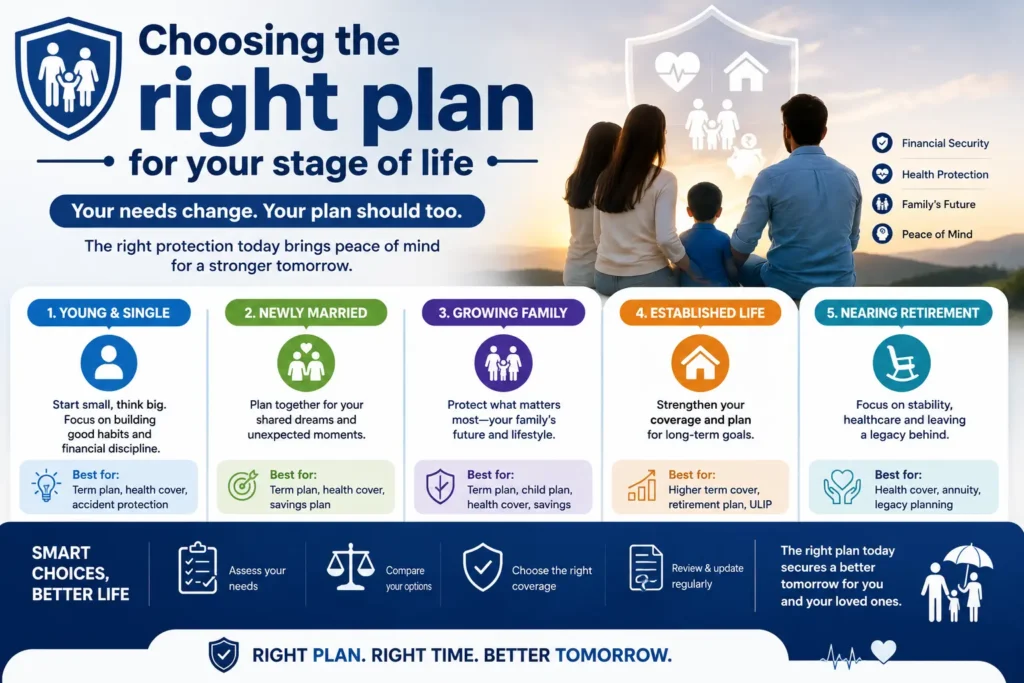
Choosing the right plan for your stage of life
Frequently asked questions
Final thoughts
Choosing a protection plan isn’t really about comparing premiums side by side — it’s about being honest with yourself about who relies on you, and for how long. The right plan is the one sized to your actual obligations, bought while you’re young and healthy enough to get the best terms, and backed by an insurer you trust to show up when it matters.
There’s no perfect plan, only a plan that fits your life today with room to grow as your responsibilities do. Start with the cover you need, keep protection and investment separate, and revisit the decision every few years rather than treating it as one-and-done.