Term Life Insurance Plans: Complete Guide to Benefits & Cost
State Life Term life insurance is a simple and affordable way to protect your family’s financial future. A term life insurance plan provides life coverage for a specific period, giving your loved ones financial support if the policyholder passes away during the policy term. In this complete guide to term life insurance plans, we’ll explain how they work, their key benefits, typical costs, eligibility, and important factors to consider before choosing a plan. Whether you are buying life insurance for the first time or comparing different options, this guide will help you understand term life insurance in simple and practical terms.

Life Insurance · Family Finance
Term Life Insurance Plans: Complete Guide to Benefits & Cost
The plainest, most affordable form of life cover you can buy — and also the one most people misunderstand. Here’s exactly what you’re paying for, what you get back, and how to choose coverage that actually fits your family.
Most people buy their first life insurance policy the same way they buy a fire extinguisher — quickly, without much research, and hoping they never need it. That’s not a bad instinct, but it does mean a lot of families end up either underinsured or paying for coverage that doesn’t match their actual situation. Understanding how Term Life Insurance Plans work, before you’re sitting across from an agent, changes that completely.
This guide breaks the whole thing down in plain language: what a term plan actually promises, how premiums are priced, what it costs at different ages, which add-ons are worth paying for, and how to avoid the mistakes that quietly cost people thousands over the life of a policy. No sales pitch, just the mechanics of how Term Life Insurance Plans work and how to buy one with confidence.
Section 01What a Term Life Insurance Plan Actually Is
Strip away the marketing language and a term plan is a simple agreement: you pay a fixed premium for a set number of years — the “term” — and if you pass away during that window, the insurer pays a lump sum, called the death benefit, to whoever you named as your beneficiary. If the term ends and you’re still here, the coverage simply expires. There’s no cash value building up in the background, no investment component, no maturity payout. It’s pure protection, priced for exactly that and nothing more.
That simplicity is precisely why Term Life Insurance Plans tend to cost a fraction of what permanent policies charge for the same coverage amount. You’re not paying for an investment wrapper — you’re paying for the insurer to carry risk on your behalf for a defined period, usually the years when your income is supporting other people the most.

Section 02How the Coverage Actually Works, Step by Step
The mechanics are more transparent than most financial products you’ll ever buy. You choose a coverage amount — often called the sum assured — based on what your dependents would need to replace your income, pay off debts, and cover future costs like education. You choose a term length, typically anywhere from 10 to 40 years, ideally matched to how long people are financially depending on you. You pay premiums, usually monthly or annually, and those payments stay level for the entire term if you’ve chosen a level-premium plan.
- Sum assured — the amount your beneficiaries receive if a claim is made.
- Premium — what you pay, calculated from your age, health, and coverage amount.
- Term length — the number of years the coverage stays active.
- Beneficiary — the person or people legally entitled to the payout.
If you outlive the term, most standard plans simply end with nothing returned, which is the trade-off for the lower price. Some insurers offer a return-of-premium version that refunds what you paid in if you survive the term, but that version costs noticeably more precisely because it’s doing double duty as a savings mechanism.
Section 03The Main Types of Term Plans Worth Knowing
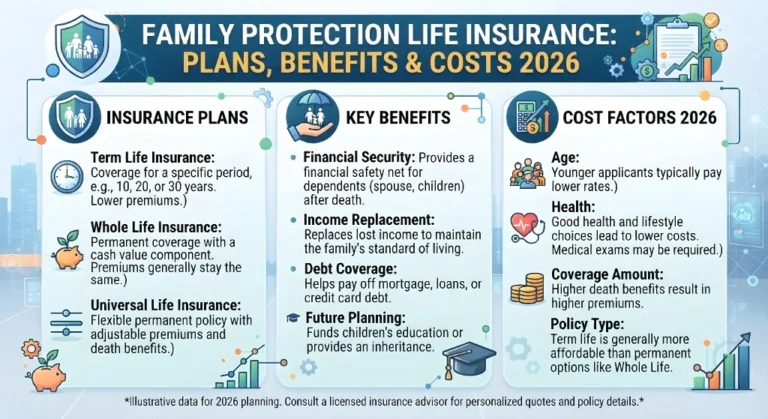
The most common structure. The sum assured and the premium both stay fixed for the entire term, which makes budgeting simple and predictable from the day you sign to the day the policy ends.
The payout shrinks over time, usually on a schedule matched to a mortgage balance. It’s cheaper than level term because the insurer’s risk shrinks along with the coverage, which makes it a natural fit for paying off a specific, reducing debt.
The opposite approach — coverage rises over time, often to keep pace with inflation or a growing family’s needs. Premiums rise accordingly, so this suits people who expect their financial responsibilities to grow rather than shrink.
You get every rupee, dollar, or pound of premium back if you outlive the term, in exchange for a meaningfully higher monthly cost. It appeals to people who dislike the idea of “losing” money on a policy they never claimed.
Often provided through an employer at little or no direct cost to you, though coverage amounts tend to be modest and the policy usually ends the moment you leave the job — which is exactly why relying on it alone is risky.
Section 04Who Actually Needs This Kind of Coverage
- Parents with dependent children — replacing income that would otherwise stop overnight.
- Anyone with a mortgage or major loan — so debt doesn’t transfer onto family members.
- Sole or primary earners — where a household genuinely relies on one income stream.
- Business owners with partners — for buy-sell agreements and business continuity.
- Stay-at-home parents — replacing the real cost of childcare and household labor.
If none of those describe you — no dependents, no debt anyone else would inherit, no income anyone else relies on — a term plan is less urgent. But for the majority of working adults supporting a household, it’s usually one of the highest-value purchases in a financial plan, largely because the premium is so low relative to the payout it guarantees.
Protection planning rarely stops at paperwork, either. Plenty of the households that take out Term Life Insurance Plans also keep a basic emergency-communication habit in place — knowing how to flash a light pattern or key a signal is a small skill that costs nothing and occasionally matters far more than any policy document. Our free Morse Code Translator is a light, five-minute way to build that habit with the whole family.
Comparing local providers before you commit
If you’re weighing regional options alongside the general guidance in this article, our detailed breakdown of Shad Abad Assurance covers eligibility rules, coverage tiers, and current pricing side by side.
Section 05What Determines the Cost of Your Plan
Pricing isn’t arbitrary — insurers run every application through a set of predictable variables, and understanding them is the fastest way to lower what you pay.
- Age at purchase — the single biggest factor; buying earlier locks in a lower rate for the whole term.
- Health and medical history — chronic conditions, BMI, and family history all shift the price.
- Smoking or tobacco use — routinely doubles or triples the premium compared to a non-smoker.
- Sum assured and term length — bigger payouts and longer terms both raise the premium.
- Occupation and lifestyle — high-risk jobs or hobbies can trigger a loading on the base rate.
- Riders added — every extra benefit attached to the base plan adds its own incremental cost.

These figures are illustrative, non-smoker estimates for a $500,000 (or equivalent) 20-year level term plan — actual quotes vary by insurer, health profile, and country, so treat this as a starting reference point rather than a quote.
| Age at Purchase | Approx. Monthly Premium | Approx. Annual Premium |
|---|---|---|
| 25 years | $18 – $24 | $210 – $280 |
| 30 years | $20 – $28 | $240 – $320 |
| 35 years | $24 – $34 | $280 – $400 |
| 40 years | $34 – $50 | $400 – $580 |
| 45 years | $55 – $80 | $650 – $940 |
| 50 years | $90 – $135 | $1,050 – $1,600 |
| Feature | Term Life | Whole Life |
|---|---|---|
| Coverage duration | Fixed period (10–40 years) | Entire lifetime |
| Premium cost | Low, budget-friendly | 5–15x higher for same payout |
| Cash value | None | Builds over time |
| Payout if you outlive it | None (unless ROP chosen) | Guaranteed eventually |
| Best suited for | Income replacement, debt, dependents | Estate planning, lifelong needs |
Section 06Riders That Are Genuinely Worth Considering
- Critical illness rider — pays out a lump sum on diagnosis of covered conditions like cancer or a heart attack.
- Accidental death benefit — adds an extra payout if death results from an accident.
- Waiver of premium — keeps the policy active without payments if you become disabled and can’t work.
- Income benefit rider — pays the death benefit as a monthly income stream instead of one lump sum.
- Child term rider — extends a smaller amount of coverage to dependent children under the same plan.
Riders make sense when they cover a genuine gap in your situation rather than every option on the form. Loading a policy with add-ons you’ll never use just inflates the premium without meaningfully improving your protection.
Building an emergency-ready household
Financial protection is one half of family preparedness — the other is knowing how to signal for help if something goes wrong physically. Our free Morse Code Translator is a quick, practical tool worth bookmarking alongside your insurance documents.
Section 07How to Actually Apply for a Plan
- Calculate the coverage you need. A common starting formula is 10–15 times your annual income, adjusted for outstanding debt and future expenses like education.
- Compare quotes from multiple insurers. Premiums for identical coverage can vary meaningfully between providers, so shopping around is worth the extra hour before you commit to any single one.
- Choose your term length carefully. Match it to your longest financial obligation — a mortgage payoff date or your youngest child’s expected graduation year.
- Complete the health questionnaire honestly. Misstating your health history is one of the most common reasons claims get denied later.
- Schedule the medical exam if required. Larger sum assured amounts typically trigger a basic blood pressure, blood, and urine screening.
- Name and periodically update your beneficiaries. Life changes — marriage, children, divorce — should always trigger a beneficiary review.
- Review the policy document before signing. Confirm the exclusions, the grace period, and the exact claim process in writing.

Section 08Mistakes That Quietly Cost People the Most
- Waiting too long to buy. Premiums climb with age and any new health condition, so delay is rarely free.
- Buying too little coverage. A payout that only covers a few months of expenses defeats the purpose of the policy.
- Letting a policy lapse over a missed payment. Reinstating coverage later almost always costs more than staying current.
- Hiding health information. Insurers investigate claims, and a misstatement discovered afterward can void the entire payout.
- Relying only on employer group coverage. That protection typically disappears the day employment ends.
- Never reviewing the policy again. Life circumstances change; the coverage amount and beneficiaries should be revisited every few years.
FAQFrequently Asked Questions
Tap or hover on any question to reveal the answer.
What exactly do Term Life Insurance Plans cover?
How much coverage do I actually need?
Is a medical exam always required?
What happens if I outlive the term?
Can I renew or convert a term plan later?
Why are Term Life Insurance Plans cheaper than whole life policies?
Does smoking really affect the premium that much?
What disqualifies a claim from being paid?
ClosingThe Simple Truth About Term Coverage
Strip away the riders, the tables, and the underwriting jargon, and the core idea is almost embarrassingly simple: pay a small, predictable amount so the people who depend on you never have to face a financial cliff on top of everything else. That’s the entire reason Term Life Insurance Plans remain the backbone of most family financial plans, decade after decade — not because they’re clever, but because they solve one problem cleanly and affordably.
Whether you end up choosing a level term policy to match a mortgage, a decreasing term tied to a loan, or a plan layered with riders for extra protection, the goal is the same one it always was: making sure a single bad day doesn’t turn into a lifetime of financial strain for the people you care about most. Get the coverage amount right, review it every few years, and it becomes one of those quiet financial decisions you’re endlessly glad you made early.
And if you’re building out a fuller household preparedness kit alongside your policy, it’s worth spending five minutes with the Morse Code Translator too — financial protection and physical safety are two sides of the same planning habit, and both are far easier to set up before you ever need them.