
Family Protection Life Insurance:Plans,Benefits & Costs 2026
Family financial security is important, especially when unexpected events can affect your loved ones and their future. State Life offers life insurance solutions that can help families plan for financial protection and long-term security. Depending on the policy, coverage may help provide financial support to beneficiaries and assist with important responsibilities such as household expenses, children’s education, outstanding debts, and future financial needs.
In this guide, we will explain Family Protection Life Insurance Plans, Benefits & Costs 2026 in simple language. You will learn how family protection plans work, their key benefits, factors that may affect premiums, and important points to consider before choosing a policy.
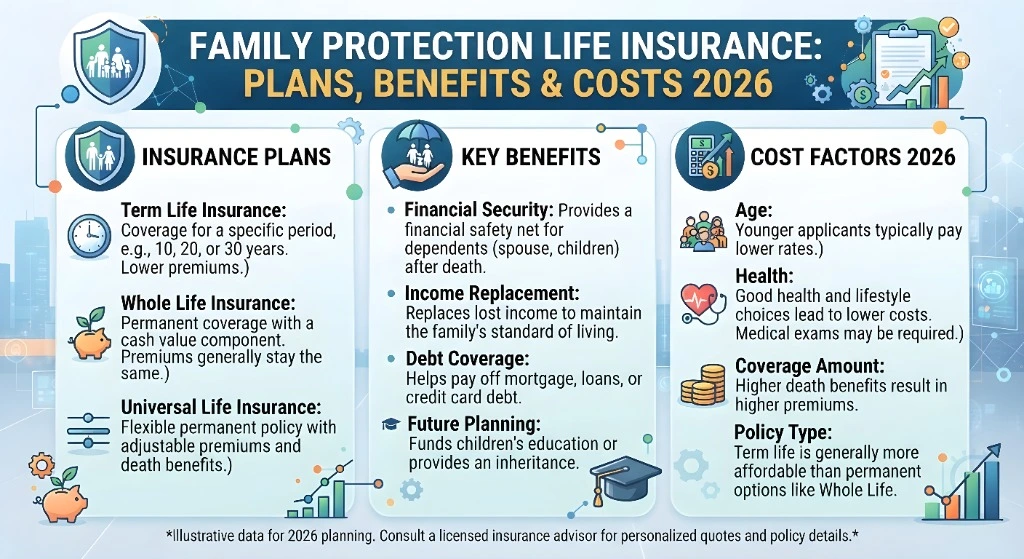
What it actually covers, what it costs at different ages, and how to pick a plan that holds up when your family needs it most.
Losing a parent or a primary earner doesn’t just break a family’s heart — it can break its finances too. Rent doesn’t stop waiting. School fees don’t pause. Grocery bills don’t care about grief. This is exactly the gap that family protection life insurance is built to close.
In 2026, more households are treating a family protection life insurance policy the same way they treat a fire extinguisher: something you hope you never need, but something you’d never live without once you understand what’s at stake. Rising living costs, unpredictable medical emergencies, and inflation eating into savings have pushed protection planning from a “nice to have” into a genuine financial necessity.
This guide breaks down what a family protection life insurance plan actually covers, how much it costs in 2026, which plan types suit different households, and how to choose one without getting lost in insurance jargon. No sales pitch — just the coverage details and the decisions that actually matter.
What Is Family Protection Life Insurance?
At its core, family protection life insurance is a life insurance policy built for one job: replacing the income and covering the obligations a family would lose if the insured person passed away unexpectedly. Unlike investment-linked or retirement-focused policies, a pure protection plan exists to pay a lump sum — or sometimes a monthly income — to your dependents when they need it most.
Think of it less like a savings account and more like a safety net stretched underneath your entire household. If something happens to the policyholder, usually the primary or co-earner, the insurer pays the sum assured to the named beneficiaries. That payout can clear a mortgage, settle outstanding loans, fund a child’s education, or simply keep the household running for years without the pressure of an income gap.
Most family protection life insurance plans in 2026 fall into two broad categories: term-based plans, which cover a set number of years at a lower premium, and whole-life plans, which run for the policyholder’s entire lifetime and often build cash value along the way. The right choice depends on your age, your dependents’ ages, your debts, and how long you actually need the protection to last.
Why Families Need This Kind of Cover More Than Ever
Inflation has quietly reshaped what “financial security” means for an average household. School fees, medical bills, and housing costs have all climbed faster than salaries in most regions, which means the hole left behind by a lost income is deeper today than it was even five years ago.
A family protection life insurance plan closes that hole in three concrete ways. First, it replaces lost income so dependents aren’t forced to sell assets or take on debt. Second, it clears outstanding liabilities — home loans, car loans, personal debt — so grief isn’t compounded by creditor calls. Third, it protects long-term goals like a child’s higher education or a spouse’s retirement, which are often the first casualties when a household loses its main earner.
Established insurers such as State Life have spent decades building protection-focused products around exactly this need, pairing straightforward payouts with optional riders for critical illness or accidental death. Whether a household goes with a long-standing name or a newer private insurer, the underlying purpose of a family protection life insurance plan stays the same: making sure a family’s plans don’t unravel when its earner is gone.
Types of Family Protection Life Insurance Plans in 2026
Not every household needs the same shape of protection. Here’s a breakdown of the most common plan structures available this year, and who each one typically suits.
| Plan Type | Coverage Duration | Best For | Builds Cash Value |
|---|---|---|---|
| Term Life Protection | 10–30 years | Young families with a mortgage or loan | No |
| Whole Life Protection | Lifetime | Long-term estate and legacy planning | Yes |
| Endowment-Linked Protection | Fixed term (15–25 yrs) | Families combining savings with cover | Yes |
| Family Income Benefit | Term-based | Households needing monthly income replacement | No |
| Joint Life (First-to-Die) | Term or whole life | Couples wanting shared, single-premium cover | Varies |
Figures represent common market structures; exact terms differ by insurer and country of purchase.
Term-based family protection life insurance remains the most popular choice among younger households because it delivers the highest coverage amount for the lowest premium. Whole-life and endowment-linked options cost more but double as long-term saving instruments, which appeals to families thinking about legacy planning alongside pure protection. Family income benefit plans are worth considering if your dependents would be better served by a steady monthly payout rather than managing a large lump sum.
How Family Protection Life Insurance Works, Step by Step
- Choose a sum assured — the payout amount your family would receive.
- Select a policy term for term plans, or commit to lifetime cover with a whole-life plan.
- Pay a premium — monthly, quarterly, or annually — based on your age, health, sum assured, and term.
- Name your beneficiaries, the people who will receive the payout.
- Claim settlement — if the insured event occurs during the policy term, the insurer pays the sum assured directly to the named beneficiaries, typically within weeks of a valid claim.
Most 2026 plans also let you attach riders — optional add-ons like critical illness cover, an accidental death benefit, or a waiver of premium if you’re unable to work. These riders raise the premium slightly but significantly widen what the policy actually protects against, turning a basic death-benefit plan into a more complete family protection life insurance package.
Key Benefits of Family Protection Life Insurance
- Income replacement — keeps household expenses covered if the primary earner is gone.
- Debt protection — clears mortgages, car loans, and personal debt so liabilities don’t pass on to your family.
- Education continuity — keeps school and university plans funded regardless of what happens.
- Tax-efficient payout — in most regions, life insurance payouts to named beneficiaries aren’t taxed as regular income.
- Peace of mind — removes one of the biggest sources of financial anxiety for parents and spouses.
- Optional living benefits — riders for critical illness or disability mean a policy can pay out while you’re alive, not only after death.
Comparing providers side by side matters more than most buyers realize. Our full breakdown of Life Insurance Plans in Pakistan lays out how major insurers structure premiums, payout terms, and rider options — a useful next read if you want to see exactly where a family protection life insurance plan fits into your wider financial picture.
Family Protection Life Insurance Costs in 2026
Premiums depend on five main factors: age at purchase, sum assured, policy term, health history, and lifestyle habits such as smoking. As a rough guide, here’s how monthly premiums typically scale for a healthy non-smoker purchasing a 20-year term plan:
| Sum Assured | Approx. Monthly Premium (Age 30) | Approx. Monthly Premium (Age 45) |
|---|---|---|
| PKR 2,000,000 | PKR 950 – 1,300 | PKR 2,100 – 2,800 |
| PKR 5,000,000 | PKR 2,100 – 2,900 | PKR 4,600 – 6,200 |
| PKR 10,000,000 | PKR 3,800 – 5,200 | PKR 8,500 – 11,000 |
| PKR 20,000,000 | PKR 7,200 – 9,600 | PKR 16,000 – 20,500 |
Illustrative averages based on typical term-plan pricing patterns. Actual premiums vary by insurer, medical underwriting, and riders selected — always request a personalised quote before deciding.
Monthly Premium by Age: 5M vs 10M Sum Assured
The clearest pattern here is how sharply age affects cost. Buying a family protection life insurance policy in your late 20s or early 30s can lock in a premium that’s roughly half of what the same coverage would cost in your mid-40s, because insurers price risk partly on life expectancy at the time of purchase. Waiting five or ten years doesn’t just delay protection — it can permanently raise what you pay for the rest of the policy term.
Insurers such as State Life typically offer tiered premium structures based on these same variables, along with payment flexibility like discounted annual premiums compared to monthly billing.
How to Choose the Right Plan for Your Family
Picking the right family protection life insurance plan comes down to four honest questions.
- How much would your family actually need? A common rule of thumb is 10–15 times your annual income, adjusted for outstanding debt and future goals like education.
- How long do you need cover? Match your policy term to your biggest financial responsibility — for most people, that’s until the mortgage is paid off or the youngest child finishes university.
- Which riders genuinely matter to you? Critical illness and accidental death riders deserve strong consideration if your family has limited savings to fall back on.
- Can you comfortably afford the premium for the full term? A lapsed policy from missed payments protects no one, so affordability matters more than maximising coverage on paper.
It’s also worth comparing a handful of insurers rather than settling on the first quote you receive. Reviewing our full breakdown of Life Insurance Plans in Pakistan is a good next step if you want to weigh established names like State Life against newer private options before committing to a specific family protection life insurance plan.
Common Mistakes to Avoid
- Buying too little coverage because the premium looks cheaper.
- Skipping riders and later realizing standard cover doesn’t include critical illness.
- Delaying the purchase until premiums have already climbed with age.
- Not reviewing the policy after major life events — a new child, a bigger mortgage, or a career change should trigger a coverage review.
- Choosing a policy on premium alone rather than the insurer’s claim settlement track record.
Frequently Asked Questions
Hover or focus on a question to reveal the answer.
Most advisors suggest 10 to 15 times your yearly income, plus any outstanding debt, though the right number depends on your dependents and future goals.
The earlier the better. Premiums are priced on age and health, so locking in cover in your late 20s or early 30s is typically far cheaper than waiting.
Term insurance is one type of family protection life insurance. Whole life, endowment-linked, and family income benefit plans are other structures serving the same protective purpose differently.
It depends on the sum assured and your age. Smaller policies often skip exams, while larger sums assured usually require basic medical underwriting.
Most policies enter a grace period before lapsing. Once lapsed, coverage stops, though some plans allow reinstatement within a set window if premiums and interest are paid.
Yes. Many families layer a workplace group policy with a personal plan to close any coverage gaps between the two.
In most jurisdictions, life insurance death benefits paid to named beneficiaries are not treated as taxable income, though local rules vary — check with a local advisor.
Health insurance covers medical treatment costs while you’re alive. Family protection life insurance provides a payout to your dependents after your death, or on a covered event if certain riders are attached.
The Real Takeaway
The single biggest mistake families make isn’t picking the “wrong” plan — it’s delaying the decision altogether. Every year without cover is a year your family carries financial risk that a modestly priced policy could remove entirely.
Whether you lean toward a straightforward term plan or a more comprehensive whole-life structure, the goal of family protection life insurance stays the same: making sure the people who depend on you financially are never left exposed. Compare a few insurers, request real quotes based on your age and health, and choose a term long enough to cover your biggest responsibilities.
Your family’s financial security shouldn’t depend on chance. A well-chosen family protection life insurance plan turns “what if” into “already handled” — and that’s worth a few minutes of comparison shopping today.




One Comment